


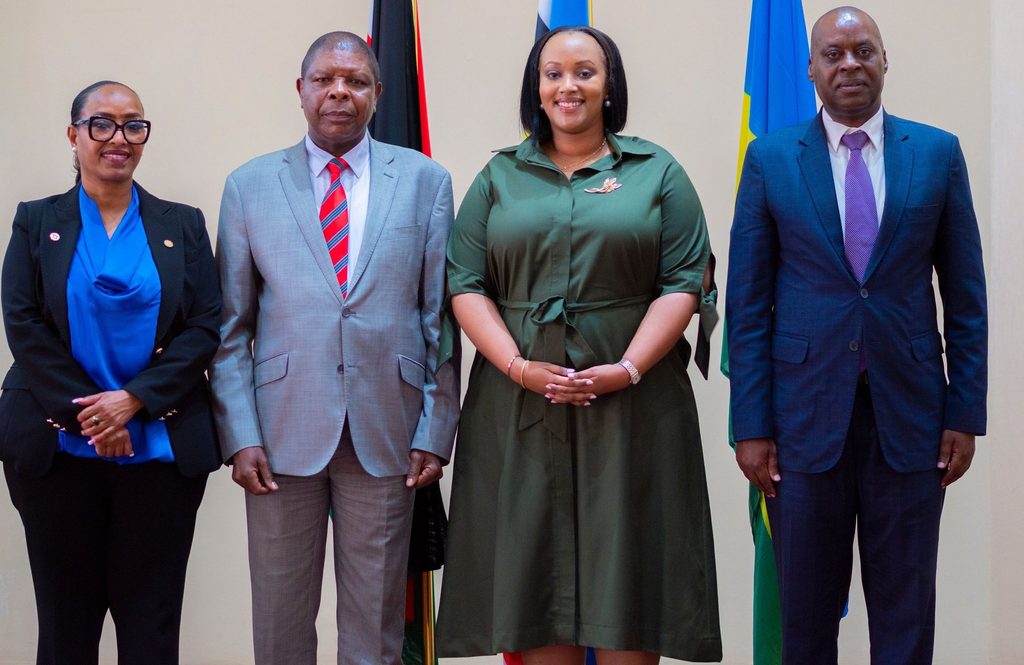
Rwanda and Kenya have opened the 10th Session of the Joint Permanent Commission for Cooperation (JPCC) in Nairobi, with the three-day meeting expected to review progress in existing partnerships and identify new areas of collaboration.
The talks bring together government officials from both countries to assess the implementation of agreements reached in previous engagements and discuss practical measures to deepen bilateral relations.
The meeting comes as Rwanda and Kenya continue to expand cooperation in strategic sectors including trade, transport, energy, security, education, investment and institutional development.
Trade and logistics are expected to remain important areas of discussion, given Kenya’s role as a major gateway for Rwanda’s international trade through the Port of Mombasa and the Northern Corridor.
In January 2026, the two countries formalised an agreement establishing and operationalising the Kenya Ports Authority liaison office in Kigali.
The arrangement is intended to improve coordination between Rwandan businesses and Mombasa Port, facilitate cargo movement and address logistical challenges affecting trade.
Rwandan cargo transiting through Mombasa increased from about 600,000 metric tonnes in 2024 to more than 800,000 tonnes in 2025.
Energy cooperation has also gained momentum.
In June 2026, Rwanda and Kenya signed agreements establishing a framework for Rwanda to import refined petroleum products through Kenya’s petroleum infrastructure.
The arrangement is designed to improve the reliability of fuel supplies, strengthen storage and transport systems and reduce logistical bottlenecks.
The partnership became operational in September when Rwanda received its first 40,000-metric-tonne shipment of refined petroleum products through Kenya’s Kipevu Oil Terminal 2 in Mombasa.
The development was described by officials as an important step in strengthening Rwanda’s energy security and the Northern Corridor.
Beyond trade and energy, the two countries have maintained cooperation in areas such as public-sector capacity building, education, security and regional integration.
Recent engagements have included efforts to strengthen institutional links between Rwanda Management Institute and the Kenya School of Government, as well as cooperation in policing and other security matters.
The 10th JPCC therefore provides an opportunity for both governments to take stock of these developments, address outstanding challenges and establish priorities for the next phase of their relationship.
Rwanda and Kenya are both members of the East African Community and have long described their relationship as a strategic partnership. Their cooperation also contributes to broader regional integration efforts, particularly through improved movement of goods, investment and people across the region.
The three-day session is expected to conclude with commitments aimed at strengthening implementation of existing agreements while opening new areas of cooperation between the two countries.