



The Rwanda Stock Exchange (RSE) joined global exchanges in marking the 2026 “Ring the Bell for Gender Equality” initiative, using the platform to call for stronger action to close gender gaps in access to economic opportunities.
The event, held in Kigali, brought together policymakers, regulators and private sector leaders, aligning Rwanda with a global campaign led by institutions including the International Finance Corporation (IFC), UN Women and the World Federation of Exchanges.
While the initiative is symbolic, speakers at the event emphasized the need to move beyond commitments toward measurable outcomes, particularly in private sector leadership and capital markets participation.
From Commitments to Measurable Outcomes
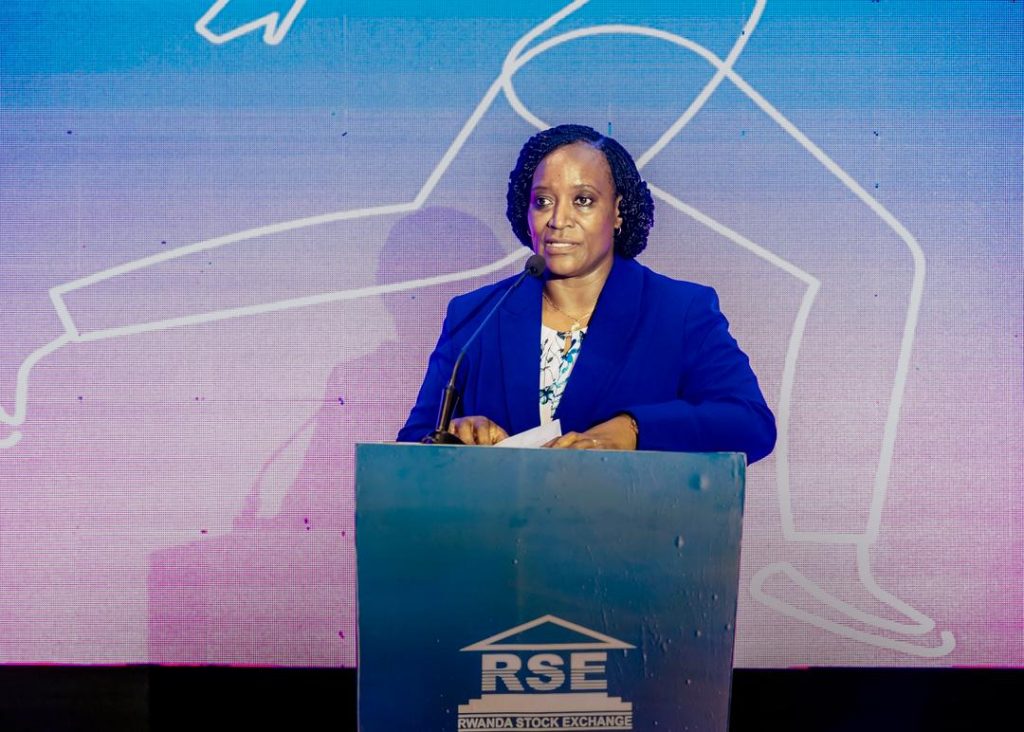
Consolée Uwimana, Rwanda’s Minister of Gender and Family Promotion, said the focus must shift from pledges to implementation.
She noted that women currently hold roughly a third of decision-making roles in the private sector, underscoring the gap that remains despite progress in public sector representation.
“We must move from commitment to action,” she said, pointing to the need to support women-led businesses and expand opportunities in sectors such as ICT, energy and infrastructure.
Capital Markets as a Lever for Inclusion
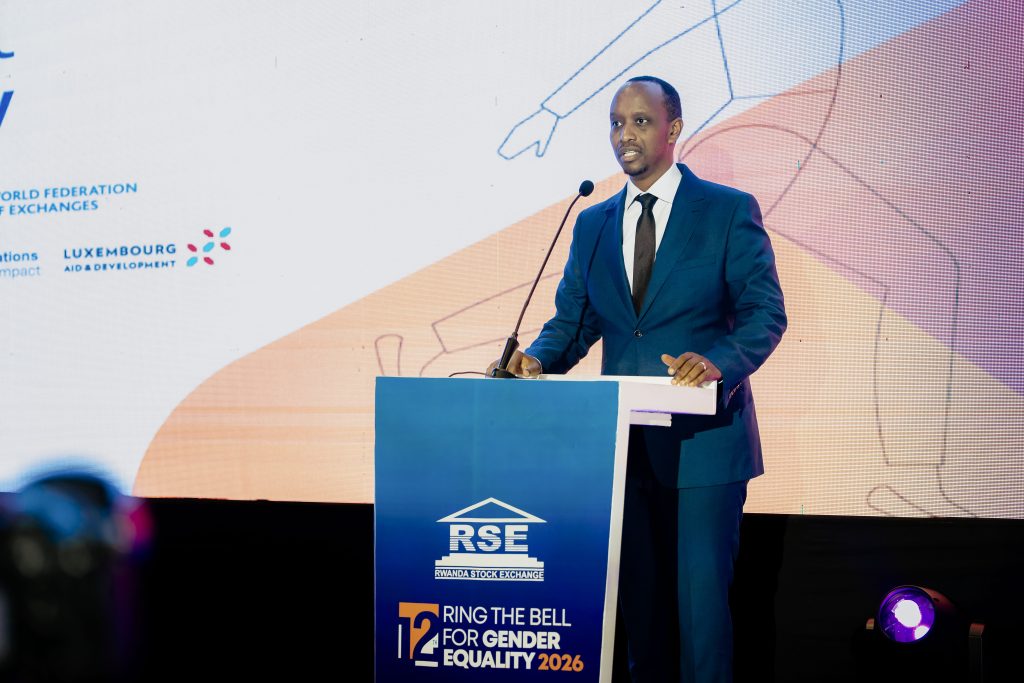
RSE Chief Executive Pierre Celestin Rwabukumba framed inclusive capital markets as a driver of broader economic performance.
“If we educate women, we educate a nation,” he said, adding that companies with diverse leadership structures tend to perform better, reinforcing the business case for gender inclusion.
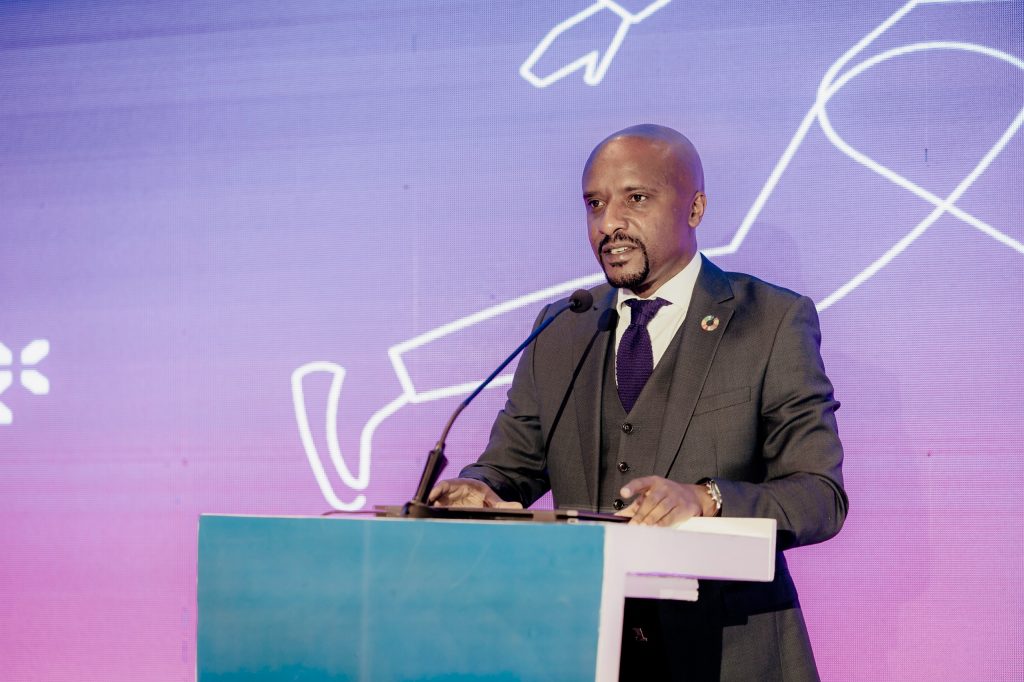
The event also featured contributions from the Capital Market Authority Rwanda, where CEO Romeo Ngarambe highlighted the role of capital markets in widening access to investment opportunities.
“When the bell rings, it signals that markets are open to everyone,” he said, positioning financial inclusion as central to long-term economic growth.
Global Momentum Meets Local Priorities
The “Ring the Bell” initiative is part of a broader global push to use financial markets as platforms for advancing gender equality, particularly through the Sustainable Stock Exchanges initiative.
Representatives from international organizations stressed that financial inclusion remains uneven, with women often facing structural barriers in accessing capital and leadership roles.
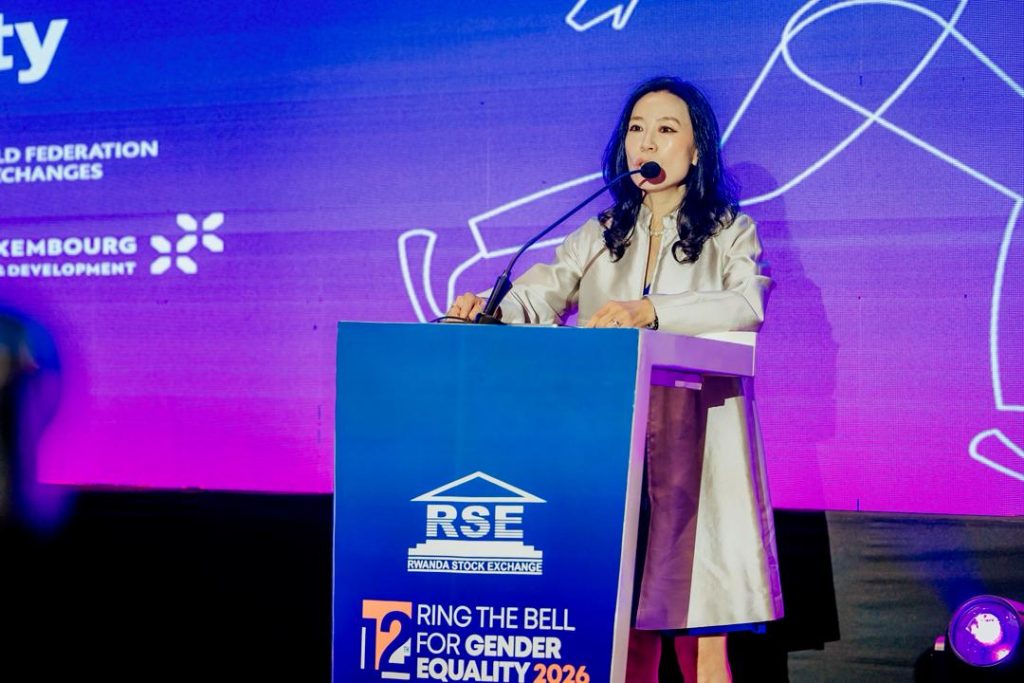
Ji Yeon Janice Ryu, IFC Resident Representative, noted that capital markets play a key role in mobilizing investment and confidence, while Tikikel Tadele Alemu of UN Women called for accelerated efforts to strengthen women’s leadership.
Recognition and Future Pipeline
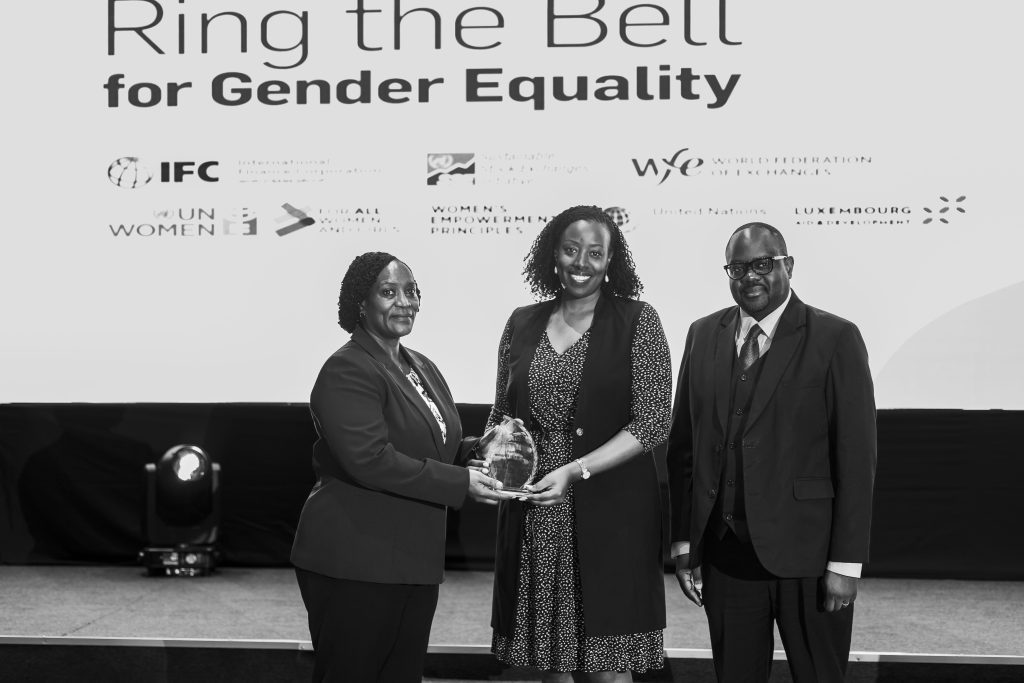
As part of the event, Hortense Mudenge, CEO of Kigali International Financial Centre, was recognized as a leading figure in advancing women’s participation in finance.
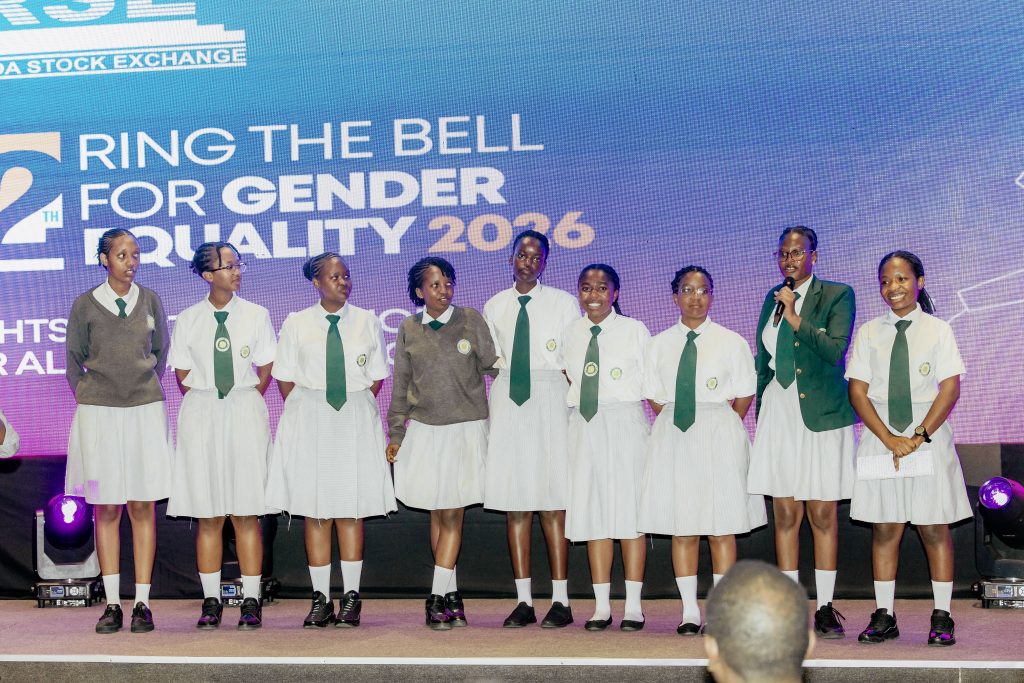
The ceremony also highlighted efforts to build the next generation of investors, with students from Gashora Girls Academy receiving support through financial literacy initiatives.
The Bigger Picture
Beyond the symbolism, the event reflects a growing recognition that inclusive financial systems are central to economic resilience and growth.
For Rwanda, which has positioned itself as a regional financial hub, expanding participation in capital markets—particularly among women—could play a critical role in deepening domestic investment and supporting long-term development goals under Vision 2050.
However, analysts note that progress will depend on translating advocacy into policy reforms, access to finance, and measurable increases in women’s representation across the private sector.
 CABN Contributor