


Kigali, February 21, 2026
The 18th edition of the Tour du Rwanda gets underway tomorrow, Sunday February 22, with 84 riders set to race across Rwanda’s iconic hills until March 1 in what is shaping up to be the most diverse and competitive edition in the race’s history.
The eight-stage race will cover 993 kilometres, with a punishing total elevation gain of over 16,608 metres, rarely dipping below 1,500 metres of altitude, confirming Rwanda’s reputation as one of the world’s most demanding racing environments.
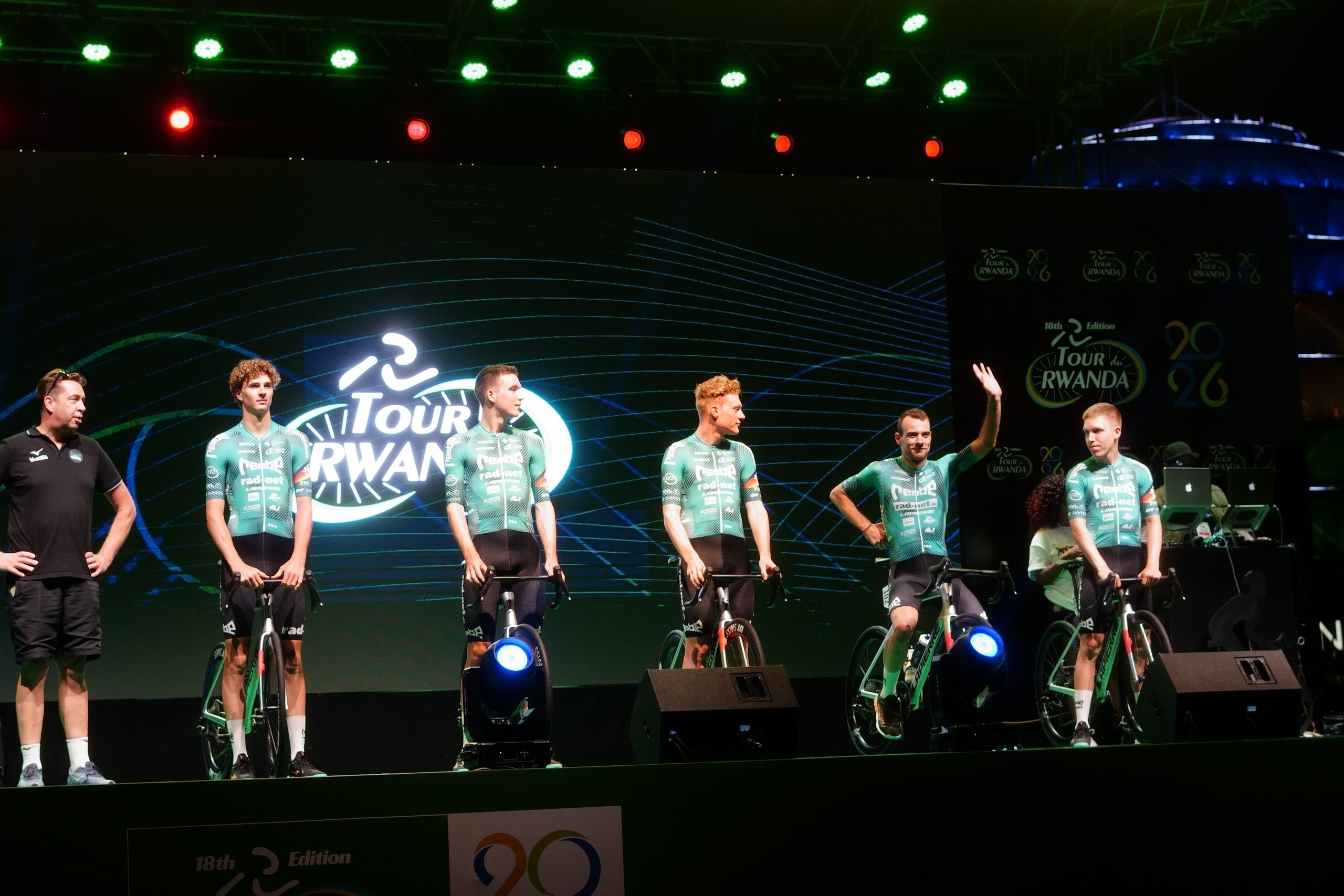
Six new teams have joined the startlist: Movistar Team Academy from Spain, Istanbul Team from Turkey, Rembe Rad-Net from Germany, Tshenolo Pro Cycling Team from South Africa, Localiza Meoo-Swift Pro Cycling from Brazil, and the African Mixed Team. A total of 18 teams have confirmed participation after UAE withdrew and was replaced.Among them are three Rwandan squads: the national side Team Rwanda, Benediction Banafrica Team and May Stars.

Africa dominates the peloton numerically, with 45 riders making up 54 percent of the field. Rwanda and Eritrea lead the national representation with 14 riders each, followed by Germany with seven, and Belgium, Brazil and Ethiopia with six each.
The 2026 edition carries particular significance as it will be the peloton’s first visit to East Africa since the Kigali World Championships, the first such event to be held on the continent, making it the first sign of what sort of legacy that landmark event may carry.
One of the defining storylines heading into the race is the remarkable presence of youth. A total of 34 riders in this year’s peloton are under 20 years old, representing 41 percent of the field compared to just 20.5 percent last year. Nine national champions are also in the mix, including Merhawi Kudus, the reigning African Road Race Champion and a former Tour du Rwanda winner in 2019.
Kudus will be joined by fellow former champion Henok Mulubrhan, who won the 2023 edition and finished second last year. Five riders who have previously stood on the final podium are also entered, including German Oliver Mattheis, who finished third in 2025, and veteran Eritrean Metkel Eyob, who has made the podium twice.

Rwanda’s Patrick Byukusenge adds a historic footnote to this edition, equalling the all-time record of 13 participations at the Tour du Rwanda, a mark previously held by Jean-Bosco Nsengimana.
Stage one is a relatively straightforward 173 km opening stage beginning in Rukomo , before the race winds deeper into the country’s hills. One of the standout moments on the route is Stage 5, a full circuit in Rubavu along the shores of Lake Kivu.
On the organisational front, the race budget has risen by 50 percent to approximately Rwf 2 billion, according to FERWACY First Vice President Valentin Bigango, who also confirmed that all stages will be broadcast live as organisers seek to expand the race’s reach through wider television and digital coverage.
Memories of last year’s edition, when the final stage in Kigali was abandoned due to dangerous road conditions, remain fresh. However, under UCI regulations, a stage can only be cancelled if there are serious safety concerns including extreme weather conditions that directly endanger riders. Organisers maintain that expected February rainfall does not automatically meet the threshold for cancellation and are confident the race will run its full course.
Since its first edition in 2009, a total of 844 different riders have taken part in the Tour du Rwanda. Eritrea holds the record for most stage victories by nation with 26, followed by Rwanda on 22 and France on 13. Only Rwanda, France and South Africa have sent riders to every edition since 2019.
 CABN Contributor