


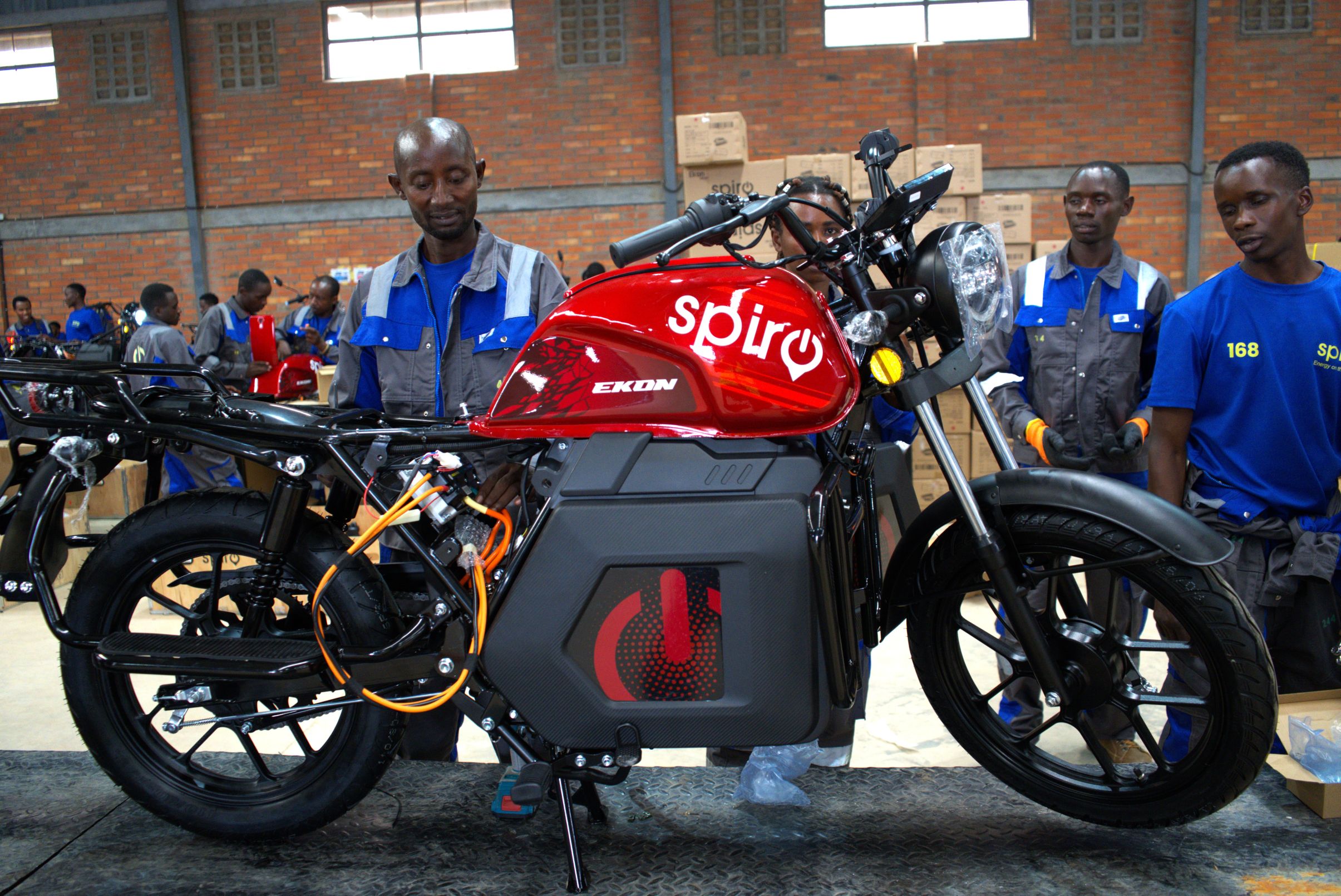
Fresh capital comes weeks after the company acquired engineering firm Coexlion and announced plans for its first African R&D center in Kenya.
Spiro has secured a $215 million investment round to accelerate the expansion of its electric mobility and battery-swapping network across Africa, in a sign of growing investor confidence in infrastructure-led businesses driving the continent’s energy transition.
The latest equity round builds on support from long-standing institutional partners, including FEDA, while bringing in fresh capital from investors in Europe and Africa. The company plans to use the proceeds to expand its battery-swapping infrastructure, strengthen local assembly operations, accelerate technology development and enter new high-growth markets.
The raise marks another milestone for the company, which has spent the past several years building one of Africa’s largest electric mobility ecosystems and is increasingly positioning itself as an energy and technology platform rather than simply an electric motorcycle company.
Investors See Long-Term Potential
“We are investing in Spiro and bringing Danish pension capital into one of Africa’s most promising growth markets because we see potential for significant commercial growth in Spiro and electric mobility across Africa, as well as measurable climate impact. That is exactly the type of investment we want to make,” said Lars Bo Bertram, CEO of Impact Fund Denmark.
The investment comes amid rising fuel costs, increasing urbanization and growing policy support for clean transportation across Africa, creating favorable conditions for electric mobility businesses.
According to the company, riders using Spiro’s electric motorcycles can reduce daily operating costs by as much as 40%, saving up to $2 per day compared with conventional motorcycles.
From Assembly to Engineering
In a move that signals broader ambitions, Spiro recently acquired UK-based engineering and design specialist Coexlion, which has worked with global motorcycle and EV manufacturers including Triumph, Hero, Ola Electric and Ather Energy.
The acquisition gives Spiro deeper capabilities in electric two-wheeler design, battery systems, reliability engineering and industrial design, while paving the way for the establishment of its first African research and development center in Kenya.
The Nairobi-based facility is expected to focus on designing electric vehicles specifically suited to African operating conditions, rider behavior and road infrastructure, helping reduce dependence on imported engineering and accelerating localization efforts.
The move reflects a broader shift taking place within Africa’s EV sector—from simply importing and assembling vehicles to developing indigenous engineering capabilities.
Building an African Mobility Ecosystem
Spiro currently operates in seven African markets—Kenya, Rwanda, Uganda, Togo, Benin, Nigeria and Cameroon—with plans to expand into the Democratic Republic of Congo and Ethiopia.
Its industrial footprint includes manufacturing facilities in Kenya, Rwanda and Uganda, alongside a battery recycling plant in Nigeria.
“This past year marked a defining strategic milestone for Spiro,” said Gagan Gupta, Founder of Spiro and Chairman of Equitane.
“We have become a major driver of local industrialization, value creation and manufacturing across African markets with 6,000 sustainable direct and indirect jobs. Supported by our global pool of investors, we are entering our next growth chapter to deliver clean, cost-effective energy and transport alternatives to millions of riders across the continent.”
Betting on Energy, Not Just Mobility
Spiro’s technology platform is supported by more than 150 engineers and over 30 proprietary patents. The company is increasingly expanding beyond transportation into distributed energy infrastructure.
Its innovations include IoT-enabled, solar-powered battery-swapping stations and second-life battery applications for renewable energy storage.
That strategy could position the company at the center of Africa’s broader clean-energy transition, helping reduce dependence on imported fossil fuels while supporting national renewable energy goals.
Environmental Impact
A third-party lifecycle assessment of Spiro’s operations in Kenya found that the company’s electric motorcycles generate 72% less climate impact than fossil-fuel alternatives, preventing an estimated 19 tonnes of carbon dioxide emissions over a vehicle’s lifespan.
The study also identified an 80% reduction in ozone depletion potential and a 20% reduction in particulate matter emissions, underscoring the role electric mobility could play in improving air quality across Africa’s rapidly growing cities.
As competition intensifies in Africa’s electric mobility sector, Spiro is making a broader bet: that the future of transportation on the continent will be built not just on electric vehicles, but on the infrastructure, engineering and energy ecosystems that support them.
 CABN Contributor