


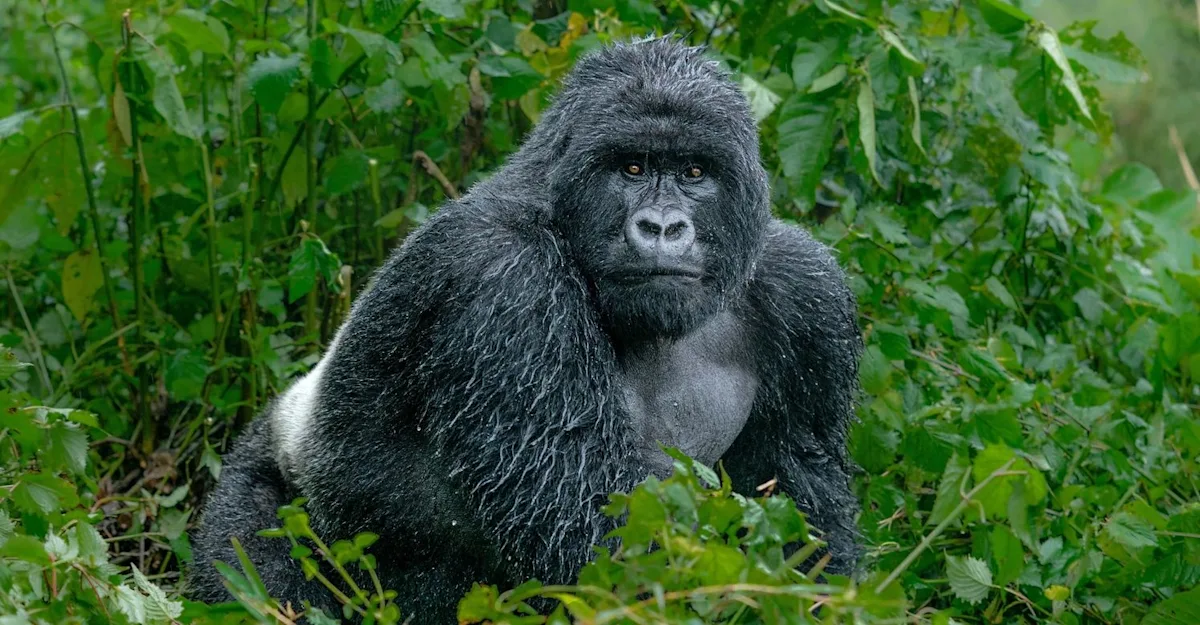
For many visitors, the journey to Rwanda begins long before they set foot in Volcanoes National Park.
It can begin with images of mountain gorillas, stories shared by previous travellers, international coverage of Kwita Izina, or the spectacle of Rwanda’s annual gorilla-naming ceremony, which brings celebrities, conservationists, business leaders and tourists into the country.
But beyond the publicity, photography and global attention surrounding the gorillas is a less visible question: How much money does all this attention actually bring into Rwanda?
New figures from the National Institute of Statistics of Rwanda (NISR) provide part of the answer and the amount is substantial.
Rwanda recorded an estimated $45.7 million in spending linked to gorilla tourism during the second quarter of 2026, equivalent to more than Rwf65 billion.
The money was spent between April and June, making gorilla-related tourism one of the most significant contributors to the country’s travel earnings during the period.
The figure comes from NISR’s Travel Expenditure Survey, which found that international visitors arriving in Rwanda by air for holidays spent $57.6 million during the three months.
Of that amount, 79.4% was associated with gorilla tourism, producing the estimated $45.7 million.
Importantly, this is not simply the value of gorilla trekking permits.
NISR’s calculation captures the wider economic activity generated by visitors whose trips are connected to gorilla tourism.
Their spending includes hotels and lodges, restaurants, drinks, local transportation, shopping, entertainment, tourist attractions and other services.
That distinction changes the way the economic value of the gorillas can be understood.
A visitor may arrive because they want to see a mountain gorilla, but their money does not remain inside the national park.
It moves through the wider tourism economy from accommodation providers and drivers to restaurants, guides, shops and other businesses serving international visitors.
From Kwita Izina publicity to real spending
For years, Rwanda has invested heavily in building an international tourism brand around its mountain gorillas.
Kwita Izina has become one of the most visible platforms in that strategy, attracting international personalities and media attention while placing Rwanda’s conservation story before a global audience.
The country has also used high-profile visitors, conservation partnerships and tourism promotion to keep the gorillas visible to potential travellers.
There are inevitably questions about the cost of staging major promotional activities and whether the money spent on attracting international attention produces measurable economic returns.
The latest NISR figures offer a tangible number to put alongside that debate.
$45.7 million in one quarter is not an advertising promise or a projection. It is an estimate of actual visitor spending recorded through Rwanda’s travel expenditure statistics.
And the money is generated by only part of the tourism market.
During the second quarter, Rwanda recorded $161.8 million in total travel-service receipts, up from $151.4 million in the first quarter. Holiday and tourism travel alone generated $59.7 million, accounting for 36.9% of total travel-service receipts.
Gorilla-linked spending therefore represented nearly 28% of all travel-service receipts recorded during the quarter.
More than 6,000 travellers came specifically for gorillas
The strength of the market is also reflected in visitor numbers.
Data from Rwanda’s Directorate General of Immigration and Emigration shows that 6,023 people arriving by air during the second quarter identified gorilla tourism as the purpose of their trip.
North America was by far the largest source of these visitors, with 3,469 arrivals, followed by Europe with 1,008.
Other regions accounted for 590 visitors, other African countries 412, the East African Community 294 and Asia 250.
The North American market is particularly important not only because of visitor numbers but also because of its spending power. North American air travellers spent $40.2 million in Rwanda during the quarter, compared with $27.7 million from Europe, $27.1 million from other African countries and $22.2 million from the EAC.
The bigger return is beyond the permit
The $45.7 million figure also illustrates why measuring tourism only through the price of a ticket or trekking permit can give an incomplete picture.
A gorilla tourist normally needs somewhere to sleep, eat, travel and spend money before and after entering the park.
That creates a chain of economic activity.
A visitor may pay for a hotel in Musanze, hire a vehicle, eat at a restaurant, buy locally made products, visit another attraction and spend money on other services.
In that sense, the gorillas function not only as a wildlife attraction but also as a high-value entry point into Rwanda’s wider tourism economy.
The latest statistics show that the value generated by that attraction is already measurable in tens of millions of dollars within a single quarter.
For a country where tourism is an important source of foreign exchange, the figures provide a financial dimension to the conservation and promotion of one of Rwanda’s most recognisable national assets.
The challenge going forward will be to ensure that the economic benefits continue to reach businesses and communities around the tourism value chain while Rwanda expands other attractions and markets.
For now, however, the latest numbers provide a clear indication that the international attention surrounding Rwanda’s gorillas is translating into something more concrete than photographs, ceremonies and headlines: foreign visitors are bringing millions of dollars into the country because of them.