


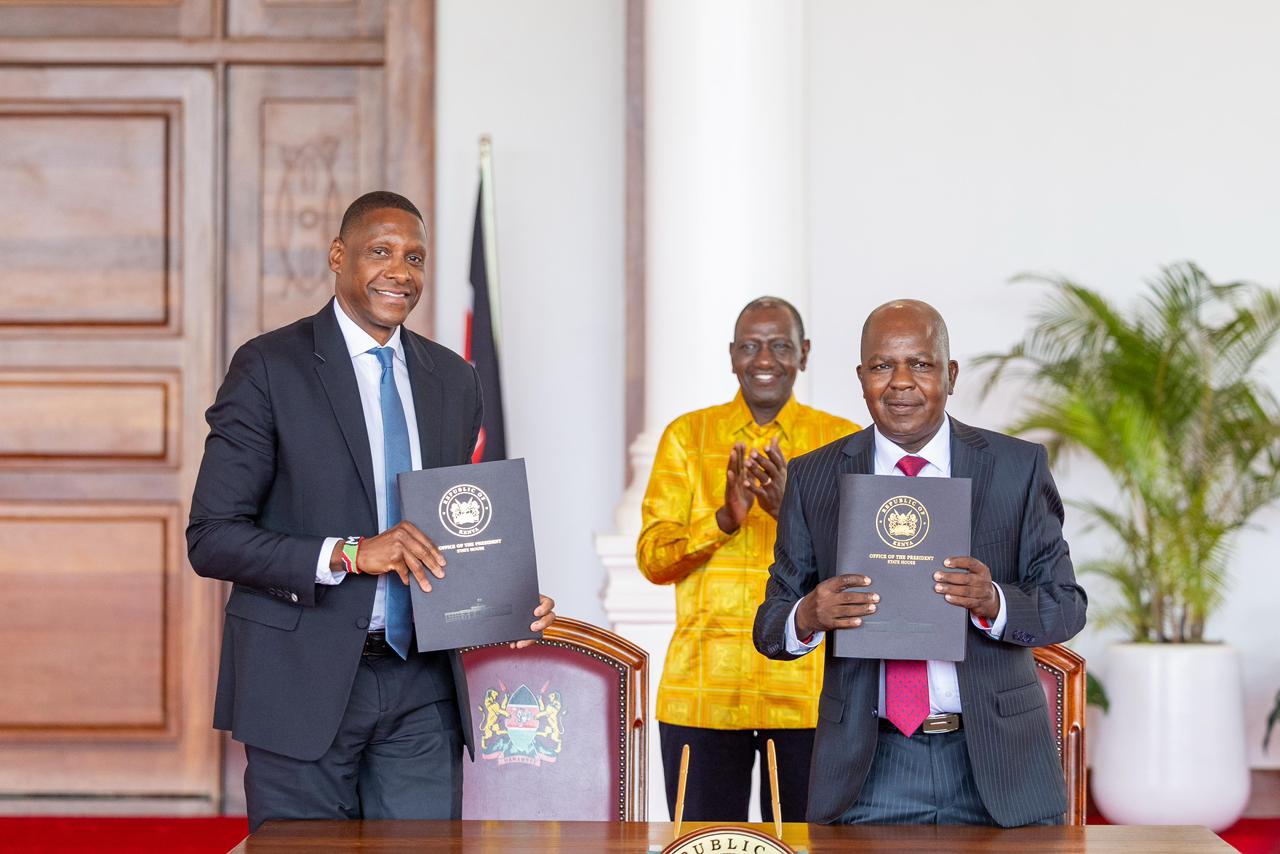
NAIROBI, April 10, 2026 – President William Ruto has announced plans to build a modern multi-purpose arena and an integrated entertainment district under the Nairobi Railway City project, placing Kenya squarely in a growing regional race to develop new sports and entertainment infrastructure.
The project comes as Kinshasa is also moving ahead with similar plans, while Kampala is understood to be lining up its own arena ambitions. Across the region, governments are increasingly treating sports and entertainment districts as serious economic assets, not just leisure projects.
Ruto said the Nairobi plan is meant to boost Kenya’s creative economy while rethinking what counts as infrastructure. Speaking during the lease agreement signing between Kenya Railways Corporation and Zaria Group, he said modern cities need venues that can attract audiences, host international events and support creative industries alongside traditional transport and road networks.
“[The] partnership between Kenya Railways Corporation and Zaria Group reflects a shared understanding that strategic urban infrastructure, particularly in sports, entertainment, and culture, is a critical driver of modern economic growth,” Ruto said.
He added that the Railway City project would include “a modern, multi-purpose arena and an integrated entertainment district” designed to expand Nairobi’s global footprint. The government says the project will be delivered within 12 months and could create up to 25,000 jobs annually.
Kigali model influence
The push also reflects the growing influence of Kigali’s infrastructure playbook, which has become a reference point in the region. Kigali has positioned itself as a pioneer in large-scale, planned urban development, including sports and public infrastructure projects that other East African capitals are now trying to emulate.
Ruto’s announcement therefore lands in a broader regional conversation about the next generation of African cities. From sports facilities to entertainment hubs, governments are increasingly linking urban renewal with job creation, tourism, investment and national branding.
The new Nairobi project also echoes the Kigali Sports City model, which has helped set a benchmark for how sport can be integrated into wider urban development strategy. In that sense, the Kenya plan is not happening in isolation, but as part of a fast-moving East African shift toward more ambitious and more commercial infrastructure projects.
Sports and growth
Beyond the creative economy, the project reflects a wider understanding that sports infrastructure can drive economic activity. New arenas, stadiums and mixed-use districts can support concerts, tournaments, exhibitions, hospitality businesses and youth employment.
That regional logic is increasingly visible in capitals such as Kinshasa, Kampala and Kigali, where sports and entertainment are now being folded into city planning. The result is a new model of competition in which governments are not only building roads and rail, but also building spaces for spectacle, culture and major events.
For Nairobi, the Railway City arena may become a symbol of that transition. For the wider region, it signals that the race to build modern sports infrastructure is only just beginning.
 CABN Contributor