
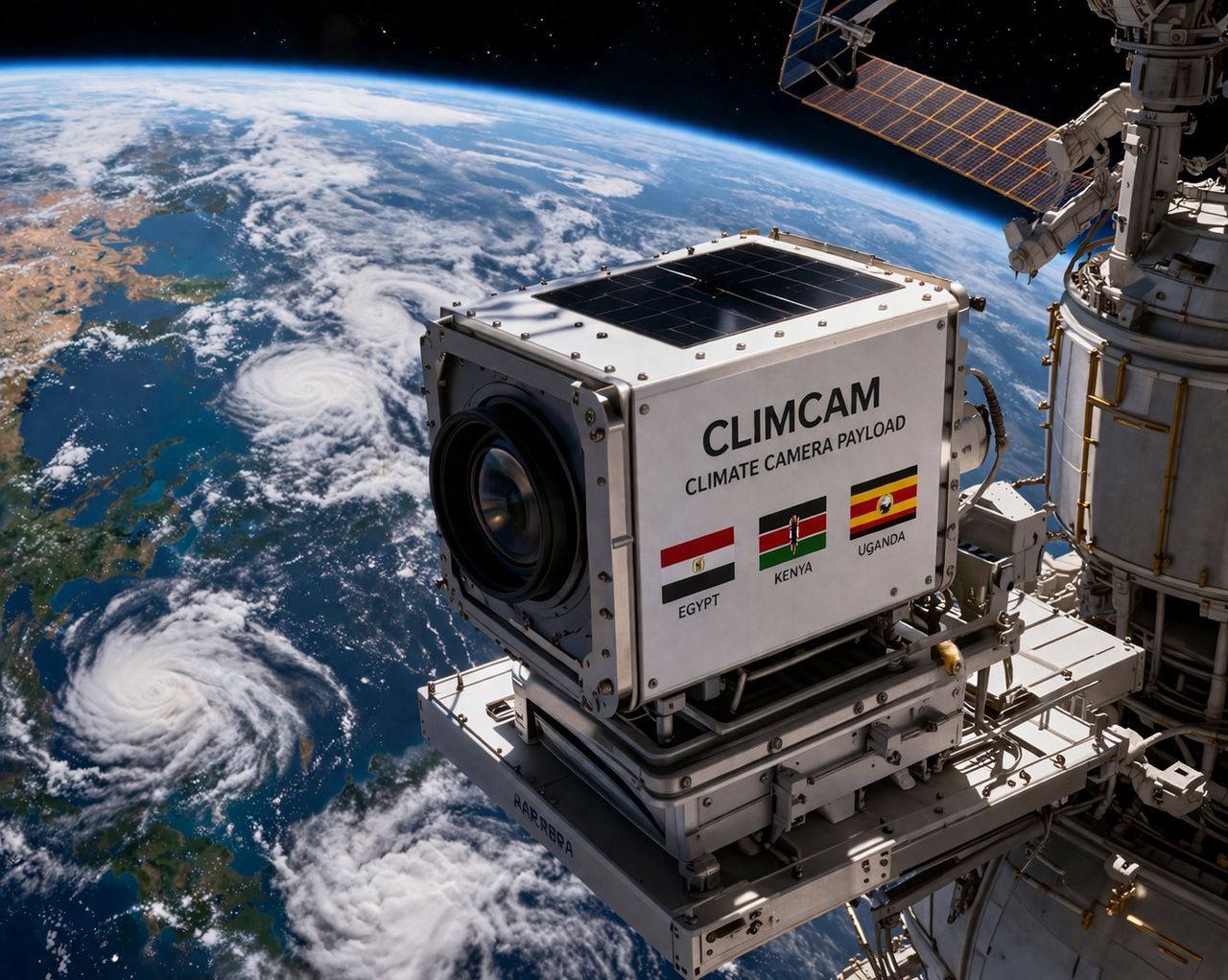
Uganda Launches ClimCam: East Africa’s New Eye in the Sky for Climate Threats
Kigali, April 10, 2026 – Uganda is deploying its first space-based climate monitoring camera today, April 10, aboard a SpaceX Falcon 9 rocket bound for the International Space Station (ISS), marking a bold step in regional disaster preparedness.
Dubbed ClimCam, the high-resolution payload – a joint Uganda-Kenya-Egypt project backed by UNOOSA and Airbus – promises real-time data on floods, droughts, and weather shifts across East Africa.
Science Minister Dr. Monica Musenero announced the launch delay from April 8 due to weather during National Science Week. “It will be commissioned in August, passing over East Africa four times daily,” she said, enabling downloads at Uganda’s POMA station for rapid analysis.
“This will help prevent disasters like Kiteezi landfill collapse by strengthening early warnings,” Musenero added, highlighting Ugandan engineers’ contributions via training in Egypt.
Game-Changer for Farmers and Disaster Response
Operational by August, ClimCam’s ~10m resolution imagery will complement ground sensors and AI tools, aiding agriculture planning, flood tracking, and drought assessment amid rising climate shocks battering Uganda’s farms and communities.
The tech shift reduces reliance on foreign satellites, boosting Uganda’s space ambitions – following PearlAfricaSat-1 in 2022 – and positions East Africa as a climate innovation hub.
For Rwanda and neighbors, this could enhance cross-border warnings via EAC frameworks, amplifying resilience in shared basins like Lake Victoria.