


Rwanda’s tax revenues increased by 27.7% during the 2025/26 financial year, with the country’s revenue authority attributing the growth to stronger compliance, digitalisation, data use and improved tax administration.
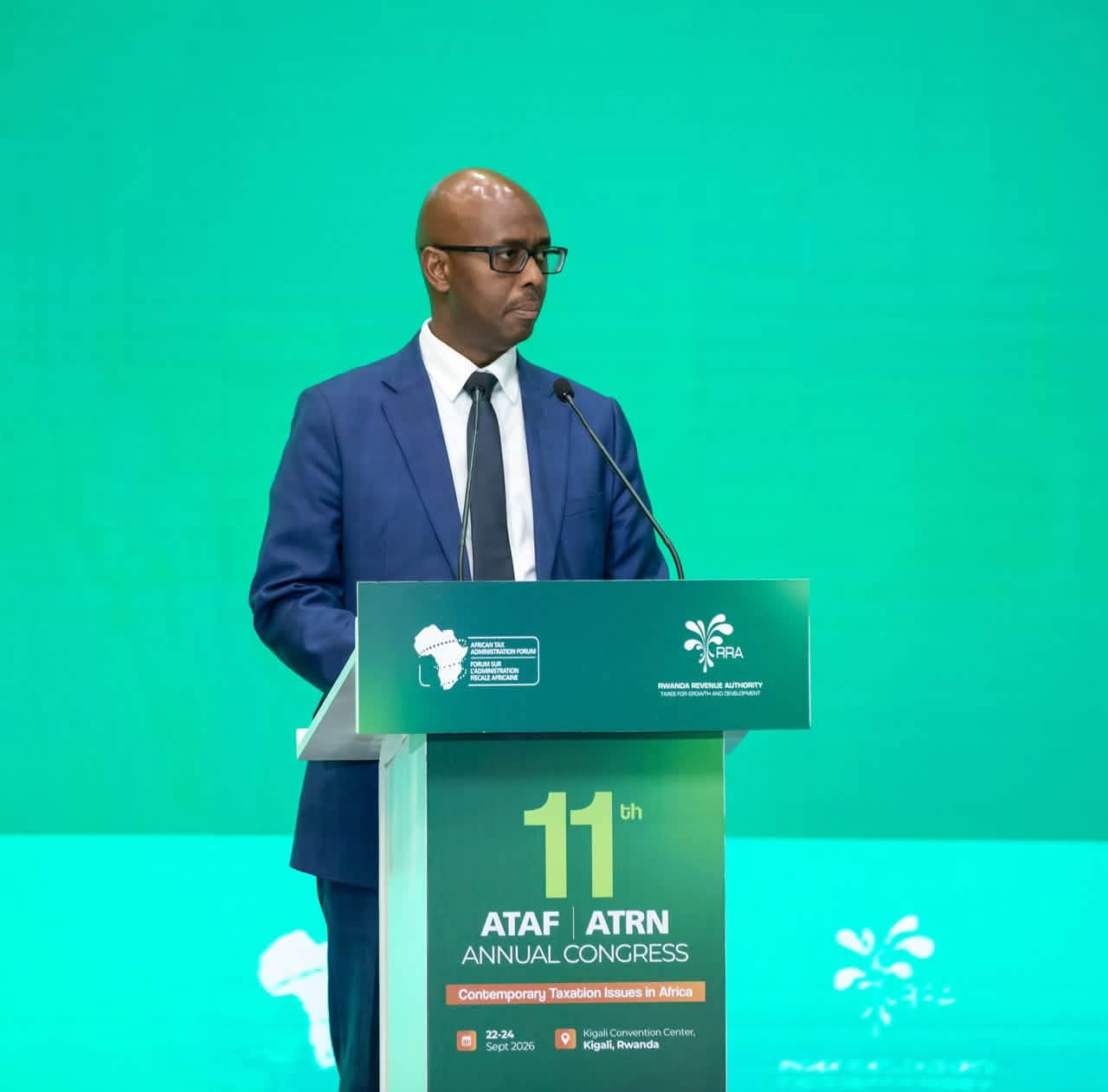
Rwanda Revenue Authority (RRA) Commissioner General Ronald Niwenshuti disclosed the performance in Kigali during the opening of the 11th Annual Congress of the African Tax Research Network (ATRN).
He said the authority collected 104.2% of its revenue target during the financial year, exceeding the amount initially projected.
«“In our last fiscal year, as it has been mentioned, we were able to achieve our target at least to 104.2%, with a growth of 27.7%,” Niwenshuti said.»
According to the RRA chief, the increase was largely driven by economic growth, improved Value Added Tax collection, expanded digital services, stronger recovery of outstanding taxes and reforms aimed at improving the tax system.
He said the results also reflected a greater focus on compliance rather than relying primarily on enforcement.
«“It was compliance-led growth, use of data, better research, better targeting, and a more disciplined relationship with taxpayers that we serve,” he said.»
The performance comes as African governments face increasing pressure to mobilise more domestic resources to fund development while reducing dependence on external financing.
Opening the congress, Minister of Finance and Economic Planning Yusuf Murangwa said strengthening Africa’s ability to finance its own development is becoming increasingly important as countries pursue investment in infrastructure, health, education, technology and other sectors.
«“Financing the continent’s development from its own resources is at the centre of the continent’s development ambition,” Murangwa said.»
He said taxation has become an increasingly important part of discussions around Africa’s economic sovereignty, particularly as economies become more integrated through regional trade and cross-border services.
For Rwanda, Murangwa said international tax rules are particularly significant because of the country’s reliance on regional trade and services delivered across borders.
«“As our economies become increasingly integrated, those rules will determine how fairly we are able to tax the value created within our borders,” he said.»
The minister also pointed to the role of the African Tax Administration Forum (ATAF) in helping African revenue authorities strengthen their technical capacity and coordinate their positions in international tax negotiations.
The three-day ATRN congress has brought together tax administrators, researchers, policymakers, development partners and other experts to examine how African countries can improve tax systems and mobilise more domestic resources.
Research is also playing a growing role in the continent’s tax policy debate. The congress received 190 research paper submissions this year, up from 120 in 2024, representing a 60% increase.
The studies and discussions are covering areas including artificial intelligence, digital taxation, cross-border tax issues, tax policy, domestic resource mobilisation and the changing structure of African economies.
For Rwanda, the forum provides an opportunity to showcase how digital tools, data-driven administration and taxpayer engagement are being used to improve revenue collection.
The 27.7% increase recorded during the 2025/26 financial year highlights the growing contribution of domestic taxation to Rwanda’s public finances, while the wider discussions in Kigali are focused on how African countries can strengthen their capacity to generate and retain more resources to support long-term development.