


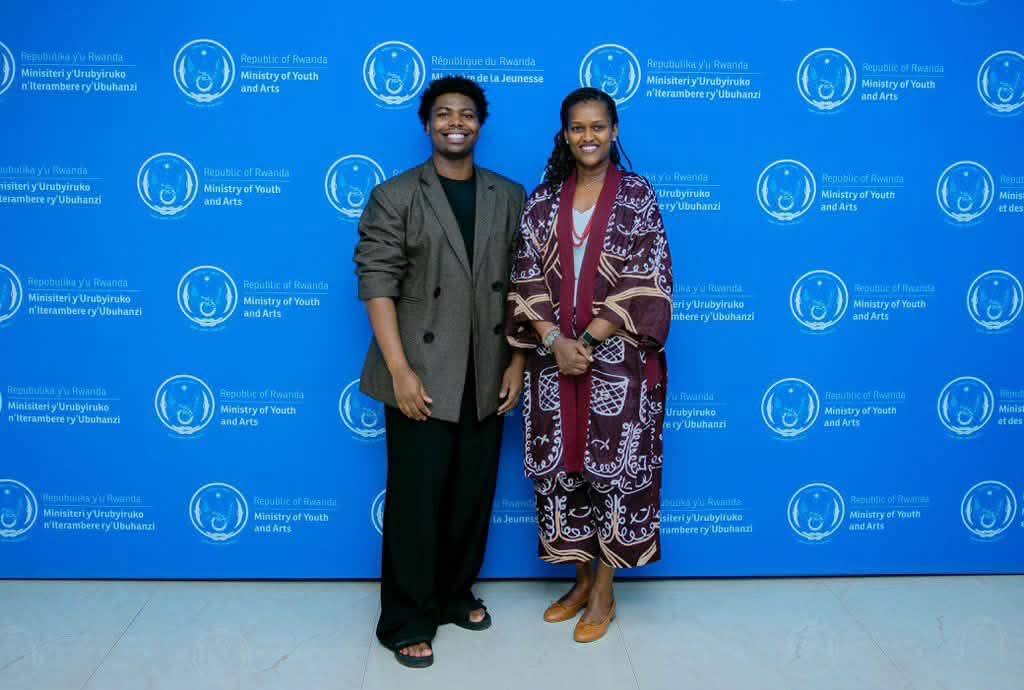
Rwanda’s fashion industry could play a greater role in creating opportunities for young people and supporting local artisans, as the government steps up engagement with emerging creatives and designers.
Minister of State for Youth and Arts Development, Sandrine Umutoni, met fashion designer Maurice Niyigena and the Matheo Studio team to discuss ways of strengthening Rwanda’s fashion sector and creating more opportunities for young talent.
The discussions focused on the potential of fashion as both a creative industry and a source of skills development, employment and economic opportunities for young people.
Umutoni said the government is committed to working with creatives and other stakeholders to build an environment where Rwanda’s young people can turn their talents into sustainable livelihoods.
«“We are committed to supporting young people to turn their creativity and talent into opportunities that can contribute to Rwanda’s creative economy,” Umutoni said.»
Niyigena, a self-taught fashion designer and founder of Matheo Creative Hub, has positioned his work around nurturing young talent while promoting locally made fashion.
Through the hub, he supports young people in acquiring fashion-related skills and developing their creative abilities. His designs also provide a platform for women artisans whose craftsmanship is incorporated into his work.
“We believe fashion can be more than clothing. It can be a platform for young people to develop skills, earn a living and showcase Rwanda’s creativity to a wider market,” Niyigena said.
The engagement comes as Rwanda continues to explore ways of expanding its creative industries and giving young people more avenues to develop skills and generate income.
For designers such as Niyigena, strengthening the fashion ecosystem will require greater collaboration between government, creatives, artisans and the private sector, particularly in skills development, market access and the promotion of locally produced fashion.
The meeting with Matheo Studio signals growing attention to fashion not only as an artistic field, but also as part of Rwanda’s broader youth employment and creative-economy agenda.