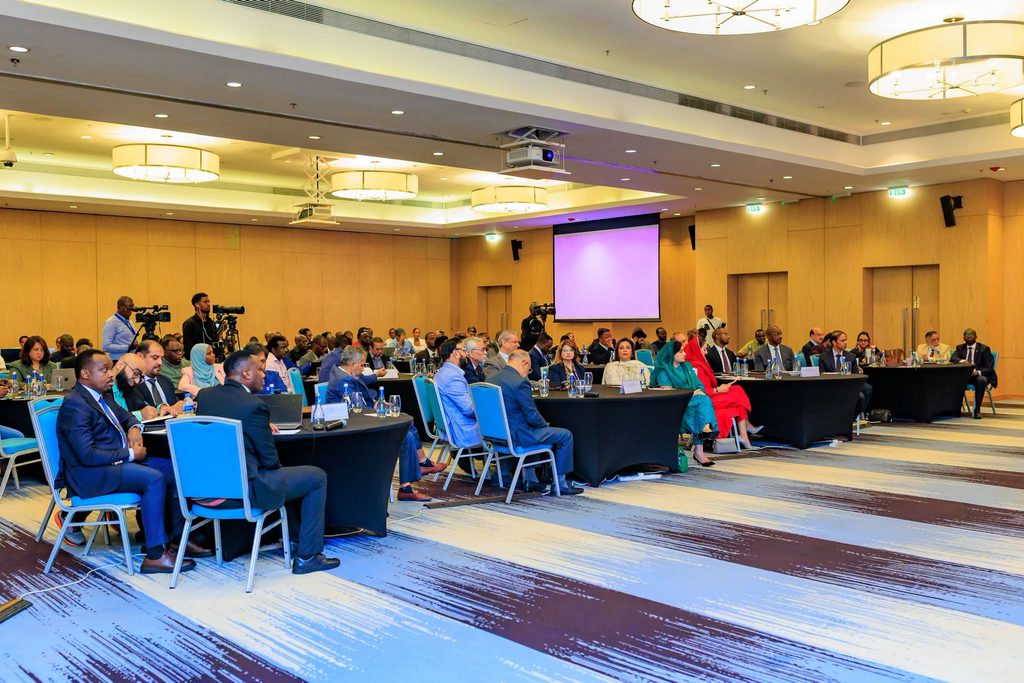


Rwanda and Pakistan are seeking to turn their longstanding diplomatic relationship into stronger trade, investment and private-sector partnerships, as government and business leaders from the two countries meet in Kigali for the Rwanda–Pakistan Investment Forum 2026.
The forum brings together public and private-sector representatives to explore investment opportunities, expand trade and identify areas for business collaboration between the two countries.
The programme includes discussions on investment opportunities, interactions between Rwandan and Pakistani businesses and the signing of a bilateral trade agreement aimed at strengthening commercial ties.
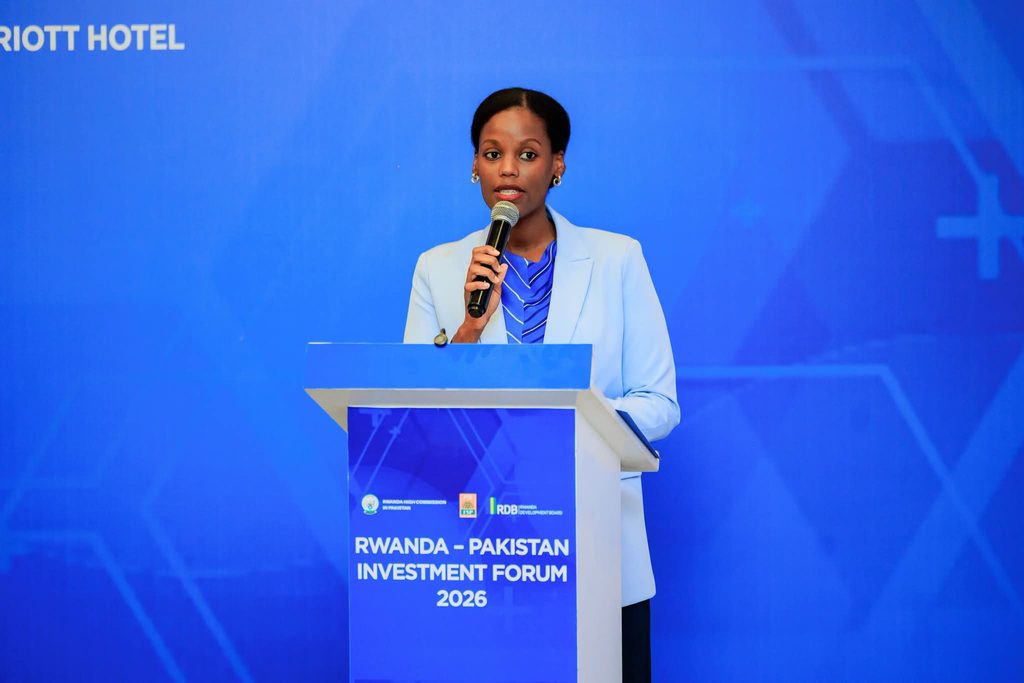
Speaking at the forum, RDB Deputy CEO Juliana K. Muganza said Rwanda is positioning itself as more than a domestic consumer market, urging Pakistani investors to use the country as a base for accessing opportunities across Africa.
“Rwanda and Pakistan have longstanding diplomatic relations, and our task now is to translate those relations into stronger trade, investment and business partnerships,” Muganza said.
She highlighted Rwanda’s sustained economic growth and growing investor confidence as factors that could make the country attractive to Pakistani businesses looking to establish or expand operations in Africa.
“Pakistani businesses are considering Rwanda at a time of sustained economic growth and increasing investor confidence,” she said.
Muganza also pointed to Rwanda’s investment facilitation mechanisms, including the One Stop Centre and investor aftercare services, which she said are designed to support businesses from the establishment stage through expansion and reinvestment.
She encouraged investors to look beyond Rwanda’s domestic market of about 14 million people and consider the country’s wider regional access.
“We encourage investors to see Rwanda not simply as a market of 14 million people, but as a gateway to a much larger region where businesses can manufacture, innovate, process, export and scale across Africa,” she said.
Pakistan eyes opportunities across key sectors
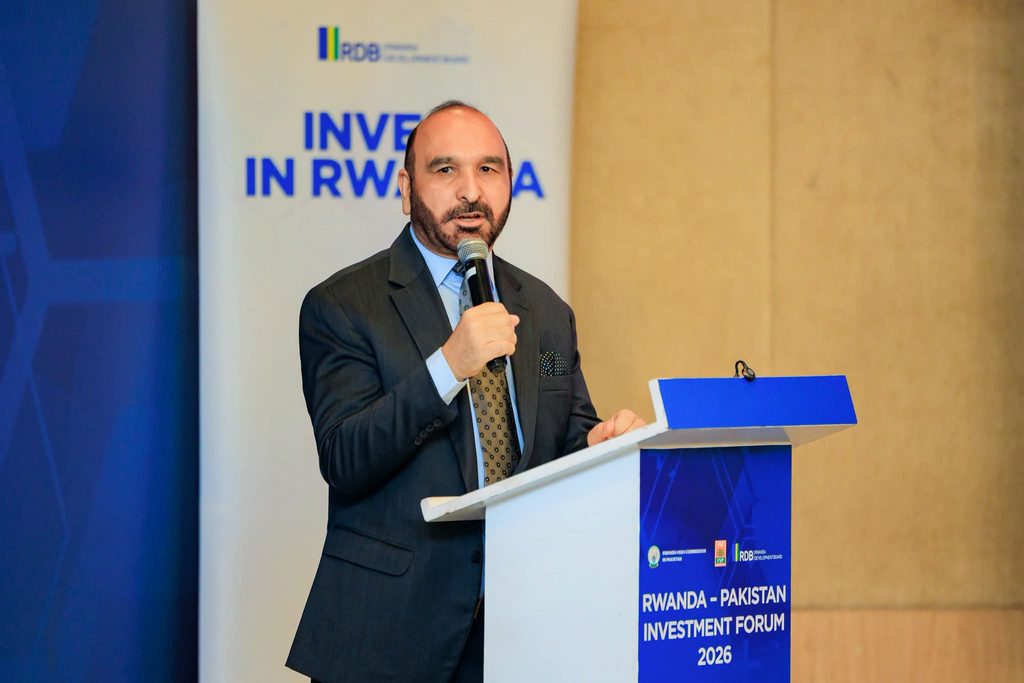
Pakistan’s High Commissioner to Rwanda, Naeem Khan, said the next phase of relations should focus on building stronger economic links between the two countries.
“Pakistan and Rwanda have excellent political, cultural and diplomatic relations, and now the focus should be on strengthening economic cooperation by building stronger trade and investment partnerships,” Khan said.
He described the two economies as complementary, arguing that differences in production and expertise create opportunities for businesses from both countries to work together rather than compete directly.
“Our economies are based on complementarity; we are not in competition, we complete each other. What Rwanda is producing, Pakistan needs, and what Pakistan is producing, Rwanda needs,” he said.
Khan identified agriculture, textiles, health, ICT, tourism and education among the sectors offering potential for deeper cooperation, while also highlighting opportunities for joint ventures between companies from the two countries.
“There are tremendous opportunities for cooperation in sectors such as agriculture, textiles, health, ICT, tourism, education and joint ventures,” he said.
Rwanda as a gateway to Africa
Khan further encouraged Pakistani businesses to view Rwanda as a platform for expanding into the wider African market.
“Rwanda can also serve as a hub for Pakistani businesses to access not only its own market, but also the wider African region,” he said.
The forum comes as Rwanda continues efforts to attract foreign investment and position Kigali as a regional centre for business, innovation and services.
For Pakistani companies, the discussions provide an opportunity to explore Rwanda as a base for manufacturing, processing, services and exports, while Rwandan businesses stand to gain from potential partnerships, investment and access to Pakistani markets and expertise.
The investment forum is therefore focused on moving bilateral relations beyond diplomatic engagement toward practical commercial partnerships, with government officials and businesses from both sides exploring areas where investment and trade can generate mutual economic opportunities.